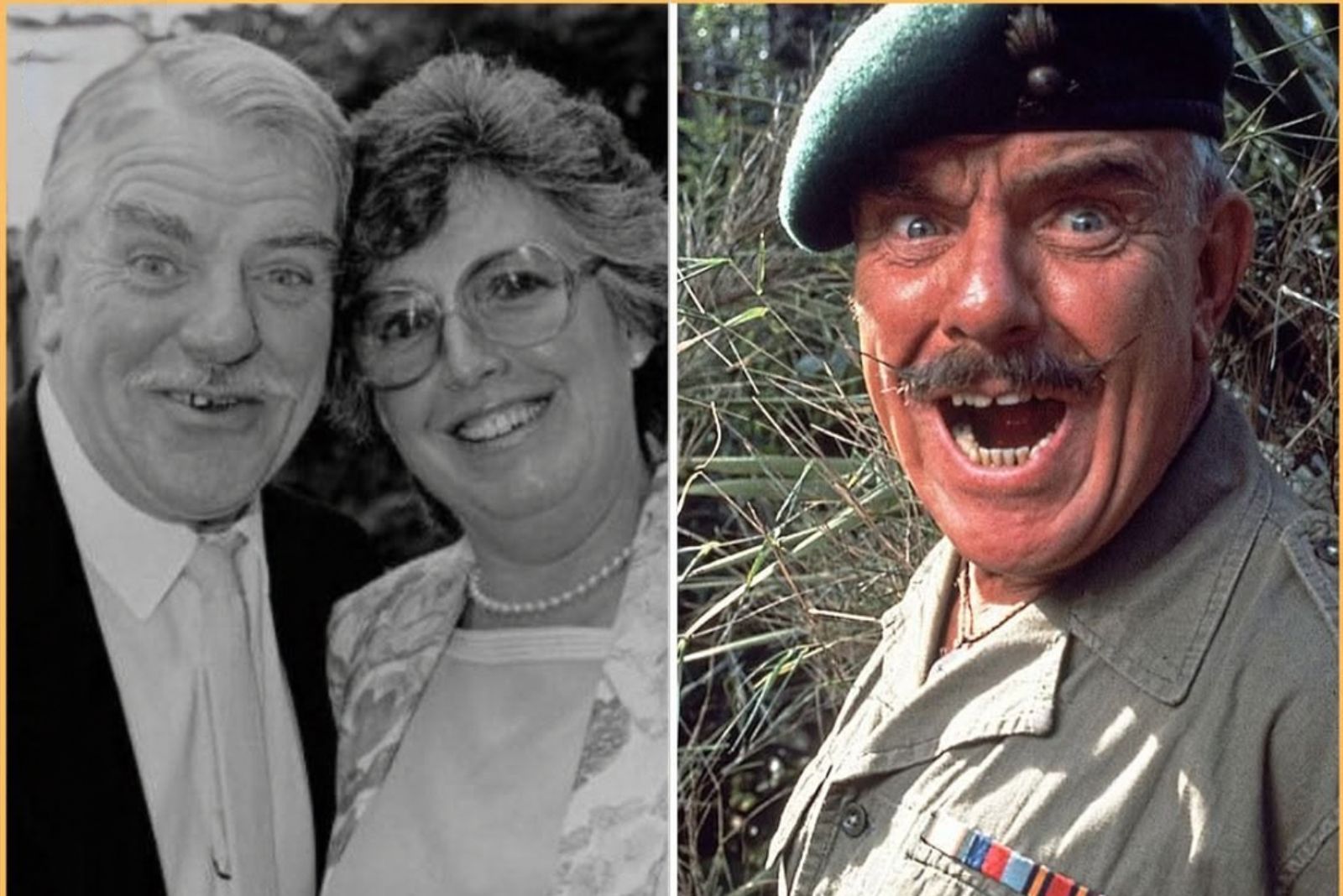
Before Windsor Davies became one of British television’s most recognizable comedy actors, he worked in a coal mine, served in the military, and taught schoolchildren. His journey to fame was anything but conventional.
For millions of British television viewers during the 1970s, Windsor Davies was the unmistakable voice of Battery Sergeant Major Williams in the BBC sitcom It Ain’t Half Hot Mum. His booming commands, stern expressions, and impeccable comic timing made the character memorable.
But behind that commanding television personality was a man whose early life had little connection to show business.
Born into a Welsh family in London, Davies followed several careers before becoming a professional actor in his early thirties. His eventual success demonstrated how life experience, determination, and an unexpected opportunity could shape an extraordinary entertainment career.
Early Life: From East London to South Wales
Windsor Davies was born on August 28, 1930, in Canning Town, East London, to Welsh-speaking parents.
In 1940, during World War II, his family moved to Nant-y-Moel in the Ogmore Valley of South Wales. Growing up in a Welsh-speaking household helped establish the cultural identity that remained important throughout his life.
He attended Ogmore Grammar School and later entered the workforce.
Before pursuing entertainment, Davies worked in a factory and in the local mining industry, training as an electrical fitter and engineer.
These early experiences placed him far from the world of television studios and professional theater.
Yet the years he spent in Wales, combined with the people he encountered through work and military service, would later influence his acting.
Military Service and a Career in Teaching
Between 1950 and 1952, Davies completed his National Service with the East Surrey Regiment, serving in Libya and Egypt.
Military life introduced him to the personalities, discipline, and distinctive mannerisms of army officers. He developed a talent for impersonation, entertaining others with his ability to imitate people around him.
Years later, those experiences would prove particularly useful when he portrayed a strict military character on television.
After leaving the army, Davies trained at Bangor Teacher Training College.
He subsequently taught English and Mathematics, including positions in Staffordshire and London.
Teaching offered a different kind of performance: communicating clearly, maintaining attention, and using his voice effectively.
Although he had a stable profession, Davies was increasingly interested in acting.
How Windsor Davies Became an Actor
During the 1950s, Davies participated in amateur theater productions.
He enjoyed performing, but he had not yet made acting his full-time career.
An important turning point came in 1959, when his wife, Eluned Evans, known as Lyn, encouraged him to pursue professional acting.
Davies took the possibility seriously.
He studied acting at Richmond College in 1960 and gained additional theatrical experience with the Kew Theatre Company.
By 1961, he had become a professional actor, working in repertory theater.
His transition was significant. Rather than entering acting directly from school, Davies brought experience from industrial work, military service, and education.
Those experiences gave him a distinctive background for the characters he would eventually portray.
The Years Before His Television Breakthrough
Davies did not become a household name immediately.
During the 1960s, he built his acting career through theater, television dramas, and supporting roles.
His early screen credits included the film The Pot Carriers (1962), while his television appearances included British programs such as Dixon of Dock Green and Z-Cars.
These parts helped him develop a reputation as a dependable character actor.
Rather than achieving overnight fame, Davies gradually established himself through regular professional work.
His major breakthrough arrived in 1974, when he was in his forties.
It Ain’t Half Hot Mum: The Role That Made Him Famous
In January 1974, the BBC premiered It Ain’t Half Hot Mum, a sitcom created by Jimmy Perry and David Croft, the writing partnership also associated with Dad’s Army.
The series was set during the final months of World War II and followed a British Army concert party stationed in India and Burma.
Davies portrayed Battery Sergeant Major Tudor Bryn Williams, a demanding military figure frequently frustrated by the entertainers under his command.
The character became famous for his loud voice, sharp expressions, and especially the command:
“Shut up!”
Davies transformed the sergeant major into one of the most recognizable personalities on British television.
His military background helped inform the performance, particularly his understanding of army discipline and commanding officers.
The program ran for eight series, producing 56 episodes between January 1974 and September 1981.
At its height, it attracted audiences of up to 17 million viewers.
For Davies, who had spent years developing his career, the role brought nationwide recognition.
Understanding the Show in Its Historical Context
Although It Ain’t Half Hot Mum was enormously popular during its original run, aspects of the series have attracted criticism over time.
Its portrayals of race, gender, and colonial-era military life reflect attitudes that modern audiences may find offensive or outdated.
Understanding these criticisms is important when examining the show’s place in British television history.
The series remains historically significant for its audience reach and its role in British sitcom culture, while also illustrating how television comedy and public expectations have changed since the 1970s.
A Surprising Number-One Music Hit in 1975
Davies’s success extended beyond acting.
In 1975, he recorded Whispering Grass with his It Ain’t Half Hot Mum co-star Don Estelle, who played Gunner “Lofty” Sugden.
The recording reached number one on the UK Singles Chart.
The song’s commercial success demonstrated the enormous popularity of the television characters and their performers.
It also gave Davies an unusual distinction: he was both a successful television comedy actor and a chart-topping recording artist.
For viewers who primarily remembered his powerful speaking voice, his music success offered another dimension to his career.
Never the Twain: A Second Major Television Success
When It Ain’t Half Hot Mum ended in 1981, Davies was already an established television personality.
That same year, he began another major role in the ITV sitcom Never the Twain.
The program starred Davies alongside Donald Sinden.
Davies played Oliver Smallbridge, an antiques dealer whose ongoing rivalry with neighboring dealer Simon Peel, played by Sinden, provided much of the comedy.
Unlike his famous military character, Oliver Smallbridge belonged to a world of business competition, personal disagreements, and neighborhood conflict.
The sitcom ran for 11 series between 1981 and 1991.
Its long run established Davies as more than the performer behind one popular character.
He had successfully moved from a military comedy to another recognizable starring role, sustaining his television career across two decades.
Other Notable Film and Television Roles
Davies continued to appear in productions beyond his two best-known sitcoms.
His credits included the Carry On comedy films Carry On Behind (1975) and Carry On England (1976).
He also appeared in the Welsh comedy film Grand Slam (1978), playing rugby supporter Mog Jones.
The film became another memorable part of his career, particularly among Welsh audiences.
During the 1980s, Davies provided the voice of Sergeant Major Zero in the science-fiction puppet television series Terrahawks.
His later acting work included Mosley (1998), Vanity Fair (1998), Gormenghast (2000), and My Family (2004).
These appearances demonstrated his versatility across comedy, drama, and voice performance.
The Man Behind the Loud Television Characters
One of the most interesting aspects of Davies’s career was the contrast between his public image and his personality away from the screen.
Audiences often associated him with loud, intimidating authority figures.
However, colleagues remembered a far gentler individual.
Following his death in 2019, fellow actor Melvyn Hayes, who appeared alongside him in It Ain’t Half Hot Mum, remembered him as generous, pleasant, and quietly spoken.
Their professional relationship revealed how different Davies was from the fictional sergeant major he played so convincingly.
His ability to create such an exaggerated character while maintaining a very different off-screen personality was part of his talent as a performer.
Marriage, Family, and Retirement in France
Davies married Eluned Evans, known as Lyn, in 1957.
They had five children: four daughters and a son.
Lyn played an important role in his professional journey, having encouraged him to consider acting as a career in 1959.
After decades in entertainment, the couple settled in southern France, near Toulouse.
Davies largely withdrew from public life, enjoying retirement after a long career in British television and theater.
Lyn died in September 2018.
Four months later, on January 17, 2019, Windsor Davies died at the age of 88.
The family remembered the couple with affection and gratitude, recognizing their long marriage and the close family they had built together.
Why Windsor Davies Remains Important in British Television History
Windsor Davies’s career provides an interesting example of how British television developed during the second half of the twentieth century.
His life connected several different worlds: industrial South Wales, postwar military service, school education, repertory theater, and mass-audience television comedy.
His breakthrough did not arrive during his teenage years or early twenties. Instead, he became widely recognized after gaining considerable experience in other professions.
Two long-running television roles helped define his legacy.
It Ain’t Half Hot Mum introduced his most famous character to millions of viewers, while Never the Twain demonstrated his continued popularity in a different comedic setting.
His career also reflected a period when British television sitcoms could attract audiences numbering in the millions, becoming major shared cultural experiences.
Today, his work can be appreciated both for its historical significance and as a reminder that the entertainment industry—and the values reflected in its productions—continues to evolve.
Final Thoughts
Windsor Davies followed a remarkable path from factory and mining work to teaching, professional theater, and television fame.
He did not begin his adult life with a guaranteed future in entertainment. Instead, he developed his craft through experience and steady professional work.
His wife’s encouragement helped him make the transition into acting, and his talent eventually brought him two of the defining roles of his career.
For many viewers, Davies will always be remembered as the booming voice of Sergeant Major Williams.
But his wider story is about much more than a television catchphrase.
It is the story of a Welsh actor whose unexpected career path left a lasting mark on British popular culture.
Sources and Further Reading
- Dictionary of Welsh Biography — Windsor Davies (1930–2019) — Biographical details, education, military service, family, and acting career.
- The Guardian — Windsor Davies Obituary — Television work, major roles, and later career.
- David Croft Official Website — It Ain’t Half Hot Mum — Original broadcast dates, episode count, and the program’s background.
- The Independent — Windsor Davies Obituary — Television audiences and historical context.
- Sky News — Windsor Davies Dies Aged 88 — Family statement and details of his death.