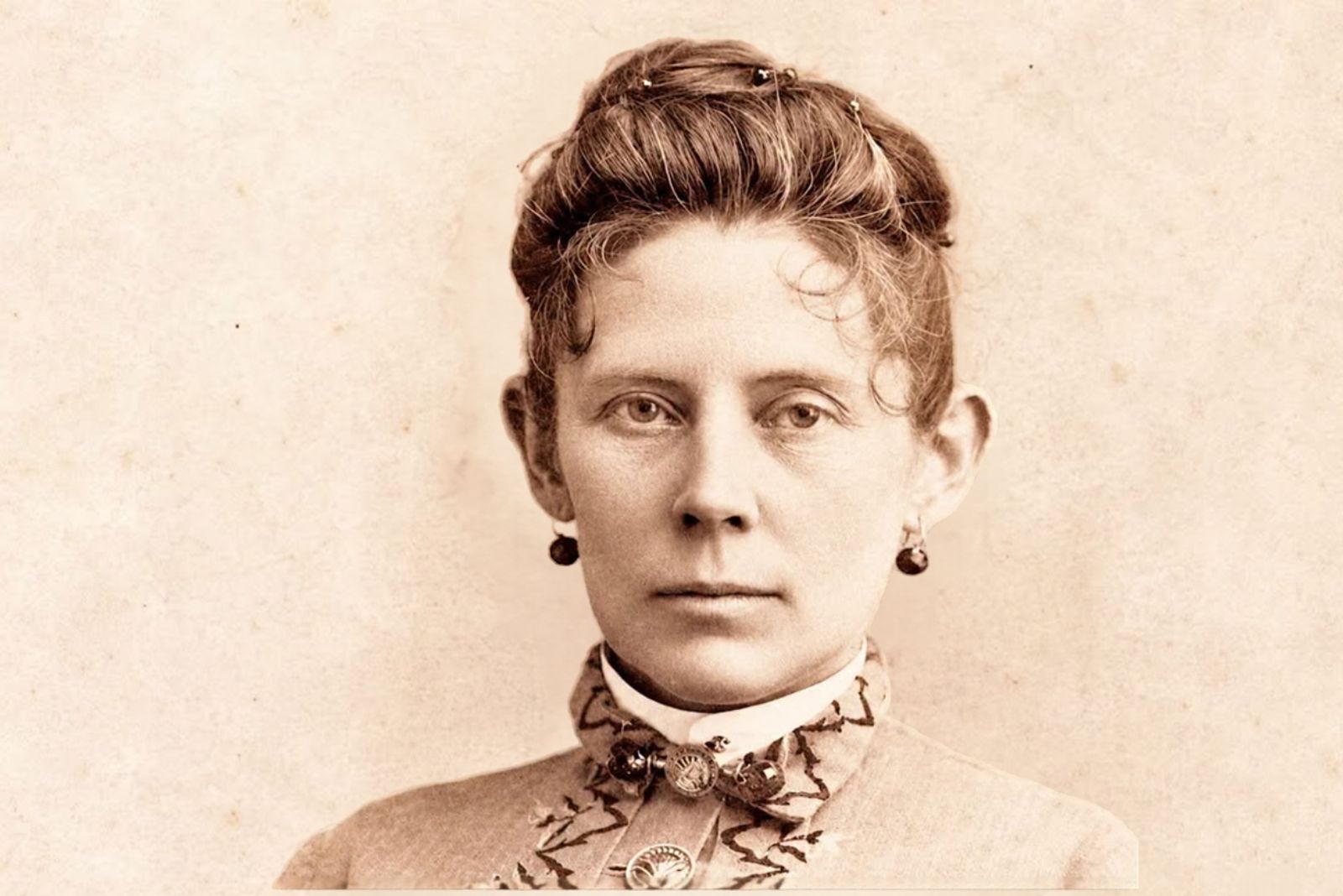
In 1878, as American bison were disappearing from the Southern Plains, a Texas rancher’s wife helped rescue orphaned calves that became the foundation of a remarkable conservation legacy. Nearly 150 years later, their descendants still roam the Texas Panhandle.
During the late 1870s, the American West was undergoing a dramatic transformation. Commercial hunting had devastated enormous bison herds, and animals that once numbered in the millions were approaching extinction.
In the Texas Panhandle, Mary Ann Goodnight witnessed the consequences of that destruction.
While others saw little reason to protect the remaining bison, she encouraged her husband, Charles Goodnight, to capture and raise orphaned calves.
What began as a small effort on a cattle ranch eventually contributed to one of the most important early bison conservation projects in American history.
Today, the Texas State Bison Herd at Caprock Canyons State Park traces its ancestry to the animals preserved by the Goodnights.
Who Was Mary Ann Goodnight?
Mary Ann Dyer Goodnight, widely known as Molly, was born on September 12, 1839, in Madison County, Tennessee.
Before becoming an important figure in Texas ranching history, she worked as a teacher and helped support her younger brothers following the deaths of her parents.
In 1870, she married Charles Goodnight, a cattleman who would become one of the best-known ranchers of the American West.
The couple initially lived in Colorado before moving their ranching operations to the Texas Panhandle.
In 1877, Charles Goodnight and his business partner John Adair established the JA Ranch in the Palo Duro Canyon region.
Mary Ann helped establish the ranch household in an isolated landscape where the nearest neighbors were reportedly 75 miles away.
Life on the ranch demanded considerable independence. Supplies, social gatherings, and medical assistance were not always readily available.
For Mary Ann, the remoteness of frontier life presented both practical difficulties and long periods of loneliness.
Yet she gradually became one of the most respected figures in the growing ranching community.
The Three Chickens That Became Her Companions
One of the most memorable stories about Mary Ann Goodnight concerns three ordinary chickens.
According to historical accounts, a cowboy once brought her three chickens intended to provide food for a Sunday dinner.
Instead of cooking them, she kept the birds as pets.
In a household far from neighboring settlements, even these small companions offered a welcome break from isolation.
The story provides a glimpse into the personal challenges faced by women living on remote nineteenth-century ranches.
Mary Ann was not simply helping manage a cattle operation. She was also building a home and community in a region where permanent ranch households were still relatively new.
Her experiences helped shape the compassionate reputation she later developed across the Texas Panhandle.
Why Were American Bison Nearly Extinct?
To understand Mary Ann Goodnight’s conservation work, it is important to understand what was happening to bison populations during the nineteenth century.
For generations, American bison had been central to the ecology, cultures, and economies of the Great Plains.
Indigenous communities depended on bison for food, clothing, shelter materials, tools, and numerous other necessities.
However, the expansion of railroads, commercial hunting, settlement, and government policies affecting Native American communities contributed to the destruction of the great herds.
Professional hunters killed bison in enormous numbers, particularly during the 1870s.
Hides were valuable commercial products, and many carcasses were left behind after the hides were removed.
The loss of bison also devastated the Indigenous societies whose ways of life were closely connected to these animals.
Between 1874 and 1878, hunting severely reduced the Southern Plains bison population.
According to the Texas Parks and Wildlife Department, estimates from 1888 suggested fewer than 1,000 bison remained across North America.
A species that had once dominated the Great Plains had been pushed dangerously close to extinction.
The Orphaned Calves That Changed Everything
Mary Ann Goodnight became deeply concerned about young bison left behind after their mothers were killed by hunters.
Historical accounts describe her distress at the suffering of orphaned calves on the plains.
She urged Charles to capture some of the surviving young animals and bring them to the ranch.
In 1878, he began collecting orphaned bison calves.
The rescued animals were raised on the JA Ranch, where domestic cattle helped provide the milk needed to sustain them.
This required more than simply bringing wild animals into a fenced area.
Bison calves needed regular care, protection, and a suitable environment in which they could grow and eventually reproduce.
The Goodnights’ efforts began on a small scale, but the surviving animals formed the nucleus of what became known as the Goodnight Herd.
Without that intervention, these particular calves might not have survived.
Their importance extended far beyond the immediate rescue.
How a Few Bison Became a Conservation Herd
The Goodnight Herd gradually increased in size as the surviving animals reproduced.
Historical research places the herd at approximately 13 bison by 1887.
By 1910, it had grown to around 125 animals.
During the 1920s, estimates placed the population at roughly 200 to 250 bison.
These numbers were significant because wild bison had become extraordinarily scarce in many areas where they had once been abundant.
The Goodnights were not the only people attempting to preserve the species.
Other ranchers and conservation-minded individuals established small surviving herds elsewhere in North America.
Together, these populations helped provide the foundation for the recovery of the American plains bison.
The Goodnight Herd became one of five historically important foundation herds recognized in bison conservation history.
Its survival ensured that descendants of Southern Plains bison remained part of North America’s living wildlife heritage.
Mary Ann’s Role Beyond Wildlife Conservation
Mary Ann Goodnight’s contributions to the Texas Panhandle were not limited to saving bison.
She became known for helping ranch workers and families in an area where access to education, healthcare, and organized community services was limited.
Historical accounts describe her assisting with medical needs, providing emotional support, and helping educate ranch hands.
These activities contributed to her reputation as the “Mother of the Panhandle.”
She also participated in the region’s growing civic and educational life.
In 1898, Mary Ann and Charles helped establish Goodnight College, an educational institution that served the developing community.
Mary Ann maintained her own involvement in cattle raising and used the Flying T brand for her livestock.
Her life illustrates how women contributed to the economic and social development of frontier communities, even when traditional historical accounts focused primarily on male ranchers and entrepreneurs.
What Happened to the Goodnight Bison Herd?
Mary Ann died in April 1926.
Charles Goodnight died in 1929.
After their deaths, the herd passed through changes in ownership and management.
Although its population fluctuated, a small group of descendants survived for decades.
By the late twentieth century, the remaining animals on the JA Ranch attracted renewed conservation interest.
Wildlife conservationist Wolfgang Frey learned about the surviving bison and contacted Texas authorities in 1994.
The Texas Parks and Wildlife Department subsequently investigated the herd’s historical significance and genetic characteristics.
This investigation helped establish that the surviving animals represented an exceptionally important part of the Southern Plains bison’s genetic heritage.
The owners of the JA Ranch donated the herd to the state.
In 1997, the animals were transferred to Caprock Canyons State Park, where their descendants continue to be managed as the Texas State Bison Herd.
Why Is the Texas State Bison Herd Genetically Important?
The Texas State Bison Herd is valuable for more than its connection to an important episode in American history.
Genetic research has identified distinctive characteristics among the descendants of the Goodnight Herd.
According to Texas Parks and Wildlife, testing revealed a rare genetic marker suggesting that the animals may represent the last remaining group directly associated with the historic Southern Plains bison population.
This makes the herd particularly important to conservation scientists.
Genetic diversity helps wildlife populations adapt to environmental changes and maintain long-term reproductive health.
Small founding populations, however, can face challenges because they begin with limited genetic variation.
For this reason, conservation management involves careful monitoring rather than simply allowing the herd to grow without supervision.
Texas Parks and Wildlife conducts genetic testing and health assessments while managing breeding, habitat conditions, and the animals’ long-term welfare.
The aim is to preserve the herd’s distinctive heritage while supporting a healthy population.
Caprock Canyons: Where the Goodnight Legacy Lives Today
Caprock Canyons State Park, near Quitaque in the Texas Panhandle, is now home to the official Texas State Bison Herd.
The park’s rugged landscape includes grasslands, steep canyon walls, and natural habitats associated with the historic range of Southern Plains bison.
The animals roam across thousands of acres, providing visitors with an opportunity to observe a species that was nearly eliminated from the region.
Their presence also benefits the surrounding ecosystem.
Bison are considered a keystone species because their grazing, movement, and interaction with vegetation can influence grassland habitats and other wildlife.
Restoring bison is therefore about more than increasing the number of animals.
It also contributes to efforts to maintain the ecological processes that shaped North America’s prairies over thousands of years.
Why Bison Restoration Matters
Bison grazing can create differences in vegetation height and plant growth across grasslands.
Their movements and grazing patterns influence habitats used by insects, birds, and other prairie wildlife.
Conservation managers study these interactions to understand how bison can contribute to healthy ecosystems.
At Caprock Canyons, habitat management includes vegetation studies, grazing controls, and prescribed fire.
These activities are designed to support both the bison and the landscape in which they live.
A Major Expansion Announced in March 2026
Mary Ann Goodnight’s conservation legacy remains relevant today.
On March 24, 2026, the Texas Parks and Wildlife Department announced that approximately 2,200 acres had been added to Caprock Canyons State Park and Trailway through two land acquisitions.
The additions included:
- Rocking W Ranch: Approximately 1,066 acres acquired in 2024.
- Hawkins Ranch: Approximately 1,120 acres acquired in January 2026.
Together, these acquisitions expanded the park to approximately 17,500 acres.
According to park officials, the new properties help protect the region’s natural landscape, watersheds, and wildlife habitats.
The Rocking W Ranch acquisition is particularly significant because it creates the potential for the Texas State Bison Herd to access additional high-plains habitat.
The newly acquired land does not automatically mean every area is immediately open to bison or visitors.
Texas Parks and Wildlife is conducting resource assessments and developing management plans to determine how the properties will be used.
Nevertheless, the expansion represents another step toward protecting the landscape and supporting long-term bison conservation.
Nearly a century and a half after Mary Ann Goodnight encouraged the rescue of orphaned calves, efforts to secure habitat for their descendants continue.
Did Mary Ann Goodnight Save the American Bison From Extinction?
Mary Ann Goodnight played an important role in preventing the disappearance of the Southern Plains bison, but she did not save the entire species single-handedly.
Several individuals and organizations helped preserve surviving bison populations across North America.
The Goodnight Herd was one of the foundation populations that contributed to the species’ recovery.
Other surviving herds, including animals protected in Yellowstone and those preserved by private ranchers, were also essential.
This distinction matters because the history of bison conservation involved many different people, communities, and preservation efforts.
Mary Ann’s achievement was helping protect a small but historically important population at a time when bison were disappearing rapidly.
Her actions became part of a much larger conservation success story.
Five Important Facts About Mary Ann Goodnight
1. She was an educator before becoming a Texas rancher.
Mary Ann worked as a teacher and supported members of her family before moving to the Texas Panhandle.
2. She helped establish a frontier ranch household in 1877.
She lived on the JA Ranch in a remote part of the Palo Duro Canyon region.
3. She encouraged the rescue of orphaned bison calves in 1878.
Those animals formed the beginning of the Goodnight Herd.
4. She was known as the Mother of the Panhandle.
Her work extended to education, community assistance, and caring for ranch workers.
5. Her conservation legacy continues today.
Descendants of the Goodnight Herd are protected as part of the official Texas State Bison Herd at Caprock Canyons State Park.
Final Thoughts
Mary Ann Goodnight’s place in American history extends beyond the story of a rancher’s wife who cared about animals.
She helped establish a home in one of the most isolated parts of the nineteenth-century Texas Panhandle, supported a developing community, and encouraged an early wildlife conservation effort when the American bison faced near extinction.
Her decision to help rescue orphaned calves became part of a broader movement that preserved the species for future generations.
Today, the descendants of the Goodnight Herd represent a living connection between the nineteenth-century Great Plains and modern conservation science.
The expansion of Caprock Canyons State Park in 2026 offers another reminder that protecting wildlife is an ongoing responsibility.
What began with a few surviving calves has become a lasting example of how individual concern, scientific management, and public conservation efforts can work across generations.
Sources and Further Reading
- Texas Parks and Wildlife Department — The Story of the Bison — Historical background, the Goodnight Herd, genetic research, and conservation management.
- Texas Historical Commission — Goodnight Ranch History — Mary Ann and Charles Goodnight, the JA Ranch, and their contributions to Texas history.
- Texas State Historical Association — Mary Ann (Molly) Goodnight — Biographical information and her role in the Texas Panhandle.
- National Park Service — Where Our Bison Came From — The historical foundation herds and their contributions to bison conservation.
- Texas Parks and Wildlife Department — March 24, 2026 Park Expansion Announcement — Details of the approximately 2,200-acre expansion at Caprock Canyons State Park.